The ERP is Dead: Why Modern Schools are Upgrading to India's First "Learning Intelligence Operating System"
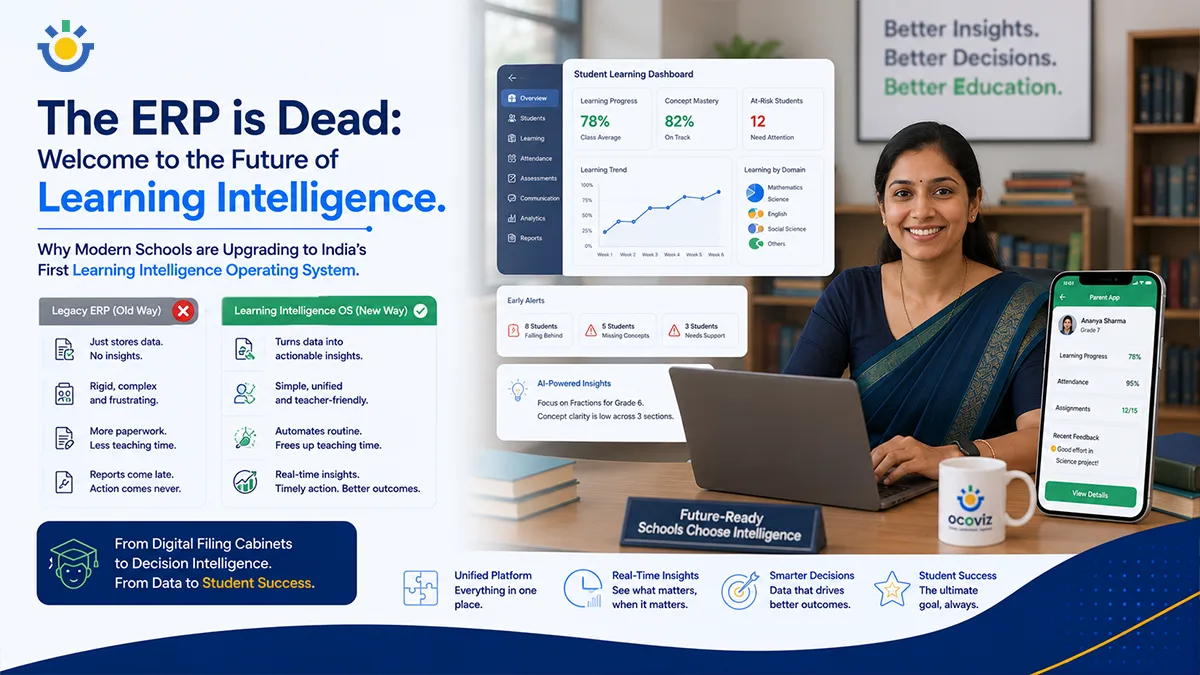
Walk into almost any school admin office mid-morning, and the scene is remarkably similar. A coordinator is wrestling with a legacy database to generate a compliance report. Nearby, a teacher is manually copying attendance into three different portals, while an administrator tries to make sense of a spreadsheet that contradicts the fee portal.
For the past two decades, Enterprise Resource Planning (ERP) software promised to fix this. It promised to streamline operations, unite departments, and bring schools into the digital age. Instead, it delivered rigid tables, clunky interfaces, and isolated data silos.
Teachers treat it like an extra chore. Principals rarely look at it because the data is too messy to guide real academic decisions. Parents dread opening the notifications. The traditional school ERP hasn't failed because it lacks features—it has failed because it was built for factories, not for human learning environments.
The Direct Answer
Traditional school ERPs are failing because they act as passive data repositories rather than active educational tools. Forward-thinking schools are upgrading to India’s first Learning Intelligence Operating System (LIOS) to bridge the gap between administrative operations and classroom outcomes, turning raw data into real-time, actionable insights for student growth.
Why Are We Sticking with Tech Designed for Factories?
Traditional ERP software was originally built for supply chains and manufacturing plants. When EdTech companies brought this framework into schools, they simply swapped "inventory tracking" for "student tracking" and "invoicing" for "fee collection."
The core design of an ERP is completely transactional. It records that an event happened—like a student missing a class or scoring a 65% in math—but it does nothing to explain why it happened or how to fix it. Because these systems focus entirely on compliance and logs, they create massive administrative friction without offering any value back to the educators on the ground.
Where Does Your Current School ERP Fall Short?
If you feel like your administrative tech is holding your staff back rather than supporting them, you are far from alone. Traditional systems generally suffer from three critical flaws:
- Siloed Data: Your academic grades, financial records, behavioral logs, and attendance exist in separate tabs that do not talk to each other.
- Teacher Burnout: Educators spend hours doing manual data entry instead of using that time to plan impactful lessons or provide student feedback.
- Reactive Insights: You only discover a student is falling behind or a department is struggling at the end of the term, when it is already too late to intervene.
What Makes a Learning Intelligence Operating System Different?
A Learning Intelligence Operating System (LIOS) flips the script. Instead of asking your team to serve the software, the software serves your team.
An intelligence-driven operating system links operations directly to academics. If a student's attendance drops, the system doesn't just log an absence; it cross-references their recent test scores and flags potential learning gaps to the class teacher automatically. This is where platforms like Ocoviz shine, seamlessly connecting daily school workflows with predictive analytics so leaders can see the full picture of institutional health on a single dashboard.
How Does a Learning OS Free Up Your Teachers?
Your teachers entered education to impact young minds, not to become data entry clerks. A modern operating system prioritizes intuitive user design to reduce the click-count for every daily task.
By automating routine administrative updates and offering smart lesson-planning helpers, the platform gives hours back to teachers every week. When tools are simple and rewarding to use, data accuracy shoots up naturally, giving leadership a cleaner, more reliable window into how the school is actually performing.
Practical Takeaways
- Audit your current software usage: Ask your teaching staff how many hours a week they spend strictly entering data versus teaching.
- Map your data flow: Identify where your admin team is manually copying data from one platform or spreadsheet into another.
- Shift from logs to insights: In your next leadership meeting, focus on what your data predicts for next month rather than just reviewing past numbers.
- Schedule a platform evaluation: Explore how a unified operating system can consolidate your fragmented software subscriptions into one overhead cost.
Conclusion
The era of managing a school through disconnected digital filing cabinets is coming to a close. School leaders no longer have to settle for rigid databases that add stress without providing clarity. By upgrading to a system designed around how humans actually learn and collaborate, you don't just optimize your administration—you create an environment where teachers can teach, students can thrive, and your institution can lead with absolute confidence.
Frequently Asked Questions
How is a Learning Intelligence Operating System different from a standard school ERP?
Will transitioning to a new operating system disrupt our school year?
Can a Learning OS help reduce teacher administrative burnout?
How does this system improve communication with parents?
In plain English, what does "Learning Intelligence" actually mean for my daily operations?
We already use separate tools for fees, report cards, and transport. Why pull them into one system?
How secure is our school's sensitive student data on a platform like this?
Our staff is not highly tech-savvy. Will they struggle to learn a new system?
How does this system help me justify the investment to our school board or trustees?
Move Beyond the Limitations of Traditional ERPs
Discover how India's premier Learning Intelligence Operating System can unify your data, empower your educators, and elevate your school's academic standards.
🚀 Book a Free Demo