Beyond the Screen: The Modern Tech Habits Universities Actually Care About
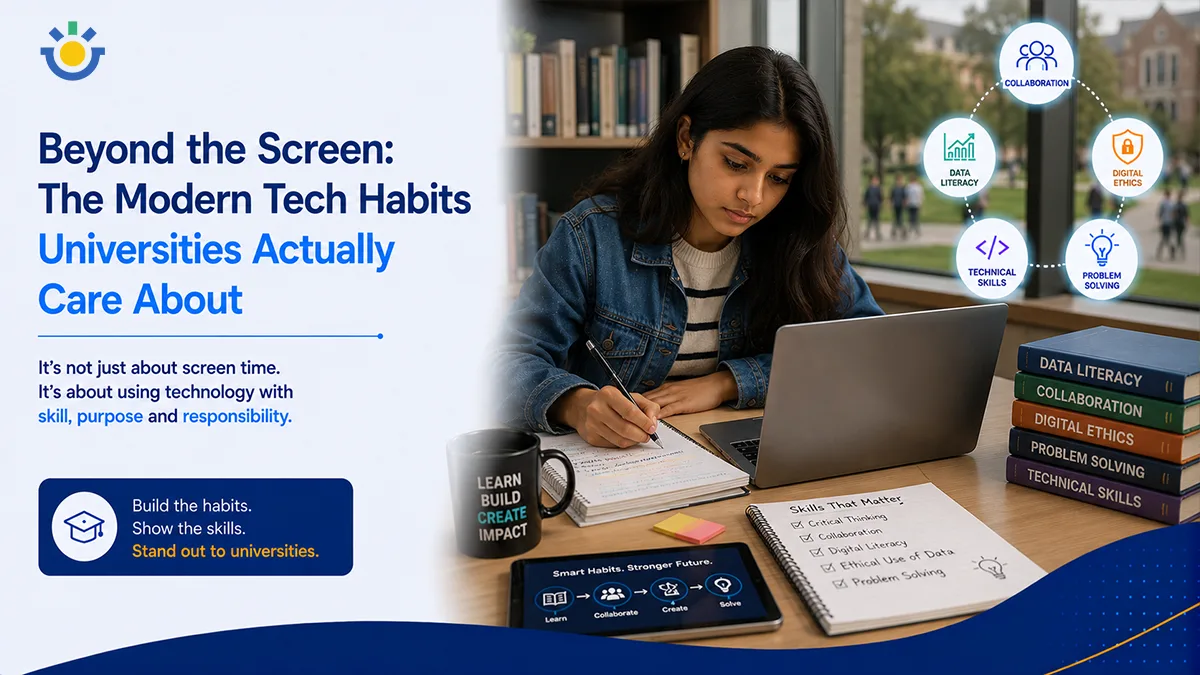
Walk into any high school common room, and you will see a masterclass in modern digital efficiency. Fingers fly across glass screens at lightning speed. Students edit multi-layered videos in seconds, jump between direct messages, and navigate algorithms with intuitive ease. To the casual observer, this generation looks incredibly tech-savvy.
Yet, when these same students arrive at university, a strange disconnect happens. Professors frequently report first-year students struggling to organize nested file structures, construct professional digital communications, or evaluate the bias within an AI-generated source.
The truth is, growing up in a digital world does not automatically make someone digitally literate. There is a profound difference between consuming technology via passive algorithmic feeds and commanding technology to solve complex problems. As educators and school leaders, our focus must shift from simply providing screen time to intentionally building the high-level technical behaviors that universities actually expect.
The Direct Answer
Modern universities care less about a student’s ability to navigate an app interface and far more about their foundational digital literacy, which includes structured data organization, professional communication etiquette, and critical AI data evaluation. Higher education requires students to pivot from passive technology users to active digital problem-solvers who can securely manage complex digital workflows. Bridging this gap is what determines true collegiate readiness in the modern era.
Is screen fluency being mistaken for academic readiness?
For years, the term "digital native" was thrown around to describe a generation that naturally understands technology. But this fluency is often superficial. Navigating a hyper-optimized social media app requires very little technical critical thinking; the software does all the heavy lifting.
When a student enters a university environment, they are suddenly faced with functional digital frameworks: learning management systems (LMS), complex cloud databases, and collaborative software ecosystems. If a student's primary tech habit is scrolling, they lack the mental models needed to manage version control on a shared document, organize research files systematically, or safeguard their personal data.
What are the core technical competencies faculties demand?
University faculty expect incoming students to possess functional digital survival skills. These go far beyond knowing how to turn on a laptop or draft a casual text message. The modern academic tech stack demands a specific trio of skills:
- Systematic File Architecture: Knowing the difference between saving a file locally versus syncing to a shared cloud folder, alongside implementing structured naming conventions.
- Professional Correspondence: The ability to craft clear, respectful, and properly formatted digital communication with professors, peers, and institutional departments.
- Data Integrity & Security: A baseline awareness of cybersecurity, password hygiene, and data privacy protocols required to navigate university networks safely.
Passive Consumption --> Consuming curated content, scrolling feeds, using single-tap apps
Active Literacy --> Structuring databases, managing cloud permissions, auditing source bias
How does Ocoviz fit into this digital transition?
This is where intentional school design makes a difference. Preparing students for this shift requires visibility into how they interact with institutional platforms daily. By leveraging a comprehensive analytics infrastructure like Ocoviz, school leadership can actively monitor student engagement patterns across school learning platforms and digital tools.
Instead of guessing if students are developing healthy workflow habits, Ocoviz provides administrators with clear data insights. If the data shows students are struggling to navigate complex digital project environments, leadership can adjust the curriculum to introduce targeted digital literacy interventions before graduation.
Are students evaluating data, or just accepting it?
With the rapid integration of artificial intelligence in higher education, universities are hyper-focused on responsible AI literacy. The modern student must know how to critically prompt an AI tool, verify its outputs for hallucinations, and understand the ethical boundaries of plagiarism in an automated landscape.
Universities do not want students who copy and paste from an LLM prompt; they want students who can audit an LLM's logic, cross-reference its citations, and add original human synthesis to the final thesis.
Practical Takeaways
- Replace generic computing classes with modules focused specifically on cloud infrastructure management and collaborative version control (e.g., Git or shared enterprise cloud spaces).
- Embed professional email and communication syntax into everyday classroom assignments, requiring students to treat communications with teachers like professional workplace interactions.
- Introduce data hygiene checkups where students must audit their personal digital footprints, build strong password portfolios, and recognize phishing vectors.
- Implement institutional data tracking via Ocoviz to identify which cohorts are underutilizing academic tech suites, allowing for proactive, targeted digital support.
Conclusion
Scrolling is second nature to this generation, but digital literacy must be taught. By explicitly moving away from the assumption that "screen time equals tech literacy," school leaders can build robust learning tracks that prepare students for the realities of higher education. When we teach students to actively manage and critically evaluate technology rather than passively consume it, we give them the ultimate competitive advantage for university and beyond.
Frequently Asked Questions
What is the difference between digital fluency and digital literacy?
Why do university professors say first-year students lack tech skills?
What software tools do universities expect students to know?
How can high schools better prepare students for university technology?
Do students need to know how to code before university?
How does AI change the tech skills universities look for?
What is data hygiene, and why does it matter for students?
Can administrative analytics platforms help improve student digital literacy?
Ready to build a truly tech-ready student body?
Discover how Ocoviz provides school leadership with the behavioral data insights needed to cultivate authentic digital literacy across your entire campus.
Book an Ocoviz Demo Today